Lazarova and Lewis team up for exuberant performances with Utah Symphony
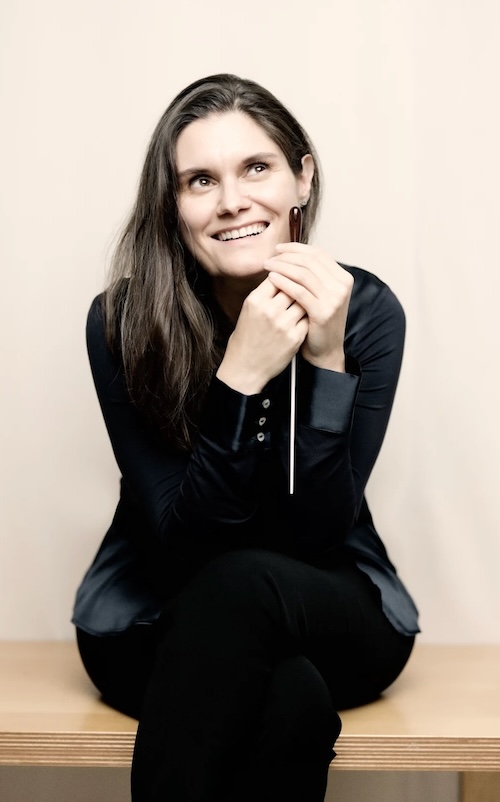
The Utah Symphony’s newly appointed principal guest conductor Delyana Lazarova took the podium in Abravanel Hall Friday night to lead a crowd-pleasing program of Ravel, Mendelssohn and Beethoven.
Lazarova, who made a well-received debut with the orchestra in May 2024 proved impressive once again by virtue of her technical command of the music and her obvious rapport with the musicians.
The program opened with Ravel’s Le tombeau de Couperin. Originally written for piano, the composer orchestrated four of the original six movements in 1919, two years after the work was written.
Ravel’s orchestration spotlights the woodwind and brass players, and Friday the principals gave solid accounts of their numerous solo passages. Oboist Zachary Hammond and trumpet player Alex Mayon stood out, in particular, with their excellent playing. Throughout the four movements Lazarova elicited finely balanced and richly textured ensemble playing.
The opening Prèlude was notable for the fluid playing by the upper strings and the interplay among the sections, which carried over into the shimmering string sound and the finely crafted contrast between the woodwinds and strings in the ensuing Forlane. The Menuet was notable for Hammond’s fine playing against soft string accompaniment, and in the concluding Rigaudon Hammond once again shone in his solo against pizzicato strings in the middle section. Lazarova’s quick tempo in the Rigaudon captured the bright luster of the music.
Soloist Geneva Lewis took the stage for her Utah Symphony debut in the evening’s centerpiece, Mendelssohn’s ever-popular Violin Concerto.

The New Zealand-born violinist gave a delightful account of the work that underscored the captivating lyricism that flows through each of the three movements. She dove into the romantic passion of the first movement with fiery playing that was nevertheless tempered with tenderness.Lewis brought out the dramatic intensity of the music with playing that ran the gamut from the softest pianissimos to the most dynamic fortissimos. Lewis’s expressive phrasing was especially nuanced and charming in the slow movement.
Lazarova proved to be a sensitive musical partner, complementing Lewis’ solo playing with a subtly inflected accompaniment. In the closing Allegro both women captured the light and free-spirited nature of the music in this exuberant and vivacious performance.
After intermission, Lazarova returned to the podium for Beethoven’s Symphony No. 4. Her reading of the work emphasized the driving energy that is at the core of each of the four movements.
Accordingly, Lazarova’s tempos were on the brisk side throughout. She led the orchestra in a bold account that captured the restless spirit and rhythmic vitality of the music, eliciting crisp, well-articulated playing from the ensemble. Lazarova’s interpretation wasn’t particularly subtle or nuanced in regard to dynamics and tempos yet she nevertheless brought depth and a fresh perspective to the performance.
In the Adagio, Lazarova brought the dynamic tension to the fore, creating contrast between this movement and the rest of the symphony. The closing Allegro was notable for some outstanding playing by principal bassoonist Lori Wike and principal clarinetist Tad Calcara.
The program will be repeated 7:30 p.m. Saturday. utahsymphony.org
Leave a Comment