Utah Symphony mixes cello rarities with colorful showpieces
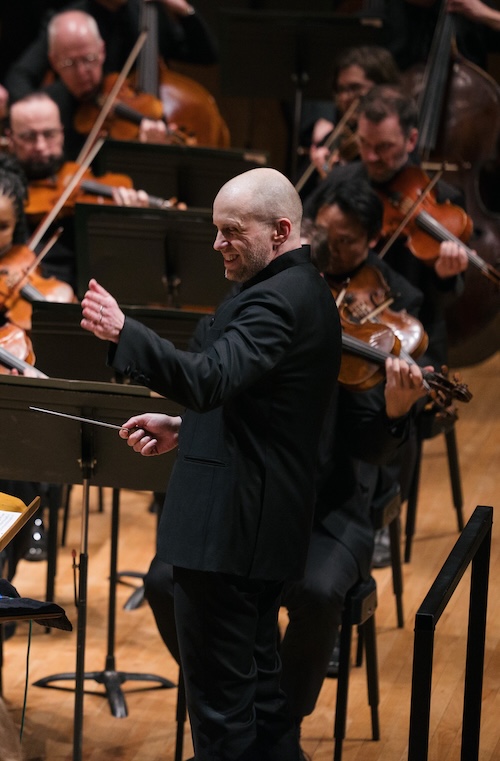
Conductor David Danzmayr is once again back on the podium in Abravanel Hall. This weekend he leads the Utah Symphony in two large-scale works: the Suite from Richard Strauss’s opera Der Rosenkavalier and Respighi’s tone poem The Pines of Rome.
At Friday’s concert, the Austrian-born conductor gave a richly textured and rhythmically engaging reading of the suite that captured the late romantic sensibilities of Strauss’s music.
After opening with a lusty account of the prelude, highlighted by the robust playing of the horn section, Danzmayr transitioned easily into the subsequent “Presentation of the Rose,” with its chromatic chordal progressions. He emphasized the Viennese sentimentality here by coaxing the strings to play with clearly defined expression and phrasings.
In “Baron Ochs’ Waltz,” concertmaster Madeline Adkins shone in her solo passages, and Danzmayr exhibited a fine sense of rubato, which he conveyed to the orchestra and allowed them to underscore the carefree mood of the music.
One of the highlights of the opera, and one of the most beautiful pieces Strauss wrote, is the trio for the Marschallin, Sophie and Octavian near the end of the opera. And in Friday’s performance, Danzmayr gave a sensuous reading that expressed the passion in the crossed relationships amid the three characters. That emotional outpouring continued as the trio evolved into the duet between Sophie and Octavian, with Danzmayr underscoring the youthful love the two express for one another. Unlike the opera, the suite closes with an extended crescendo taken from the waltz theme which Danzmayr shaped with bold, decisive strokes from the orchestra.
In The Pines of Rome, Respighi creates a vast and widely varied landscape with his colorful orchestration that the conductor deftly conveyed to the orchestra, coaxing them to play with broad gestures and nuanced expressions.
The work is in four uninterrupted sections, opening with a brisk and bright depiction of children at play in “The Pines of the Villa Borghese.” Danzmayr elicited crisp well-articulated playing from the orchestra, especially from the trumpets and horns, that captured the wildly boisterous tone of the music.
In the dark and somber “Pines Near a Catacombe,” the conductor coaxed fluid playing from the strings, with long, legato phrasing and subtle expression that captured the ominous tone of the music.
Principal clarinet Tad Calcara opened the next section, “The Pines of the Janiculum,” with beautifully crafted, lyrical playing, and closed it with a charmingly expressed duet with recorded birdsong. Danzmayr stressed the ethereal, impressionistic character of the music with his sensitive direction.
The finale, “The Pines of the Appian Way,” is a bold, deliberately paced crescendo that at the end includes four trumpets and two trombones in addition to the full complement of brass in the orchestra, giving the music greater dramatic impact. Danzmayr gave a muscular, uncompromising reading that captured the incessant drive and vitality of this concluding section and the expanded brass section played with clear, resonant power.
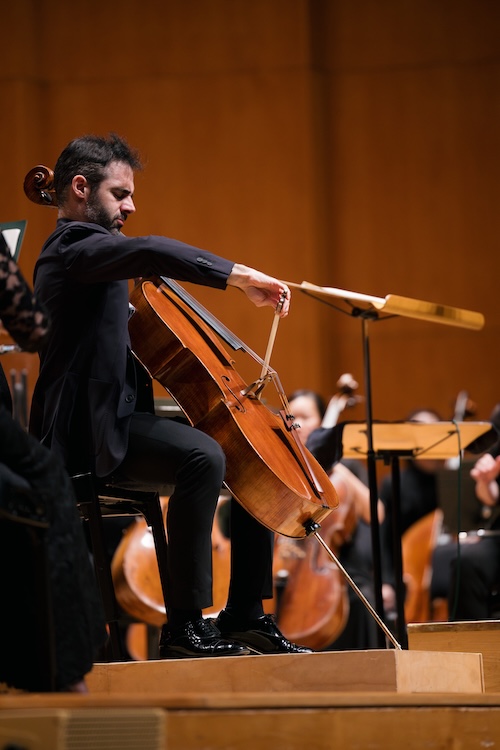
Pablo Ferrández, making his Utah Symphony debut, is the soloist this weekend in two works: Korngold’s rarely heard Concerto for Cello, and Tchaikovsky’s charming Variations on a Rococo Theme.
Korngold culled the music for his concerto from one of his film scores at the end of his Hollywood career in 1946. The short, 13-minute work is in a single movement and demands a soloist with impeccable sense of expression. Ferrández is such a player; he is in command of refined musicality and possesses a lyricism that served the concerto well.
The Spanish-born cellist brought dramatic flair and romantic passion to his account that encapsulated the shifting expressions, from pulsating energy to intoxicatingly lush, billowy phrasings. Danzmayr was a fine collaborator, allowing the orchestra to play with rich intonation and cleanly delivered lines, but never letting them overpower the soloist. Also noteworthy was the lovely solo by associate principal flute Lisa Byrnes.
Tchaikovsky is at his most musically alluring in his Rococo Variations. Never at a loss for a beautiful melody, the composer fills the work with clever variations on his delightfully appealing main tune. And Ferrández did a remarkable job capturing the work’s lyricism with nuanced and beautifully played expressions that captured the innocuous charm of the music, which was mirrored by Danzmayr’s thoughtful accompaniment.
There is also plenty of opportunity for the soloist to stand out technically, and Ferrández displayed his virtuosic side brilliantly, especially in the cadenza, playing the demanding parts with a natural flow that he also managed to give a lyrical turn to.
Especially captivating was the playful duet between him and principal flute Mercedes Smith near the end of the work.
The program will be repeated 5:30 p.m. Saturday. utahsymphony.org
Leave a Comment