Hindoyan and Ioudenitch shine in Russian and American works with Utah Symphony
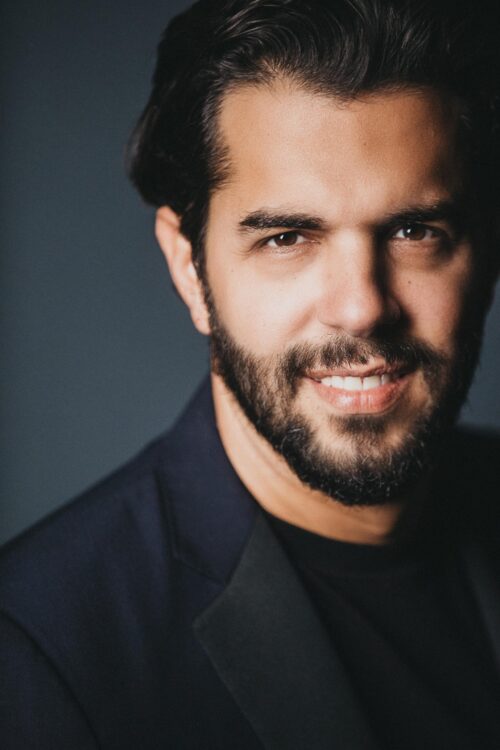
Conductor Domingo Hindoyan returned to the Abravanel Hall podium this weekend leading the Utah Symphony in a program of Russian and American music.
Hindoyan, the newly-appointed music director of the Los Angeles Opera, opened the concert with an atmospheric reading of Sofia Gubaidulina’s Fairytale Poem.
The short, 12-minute piece is based on a children’s story by the Czech screenwriter and author Milos Macourek about a piece of chalk that dreams about drawing beautiful pictures of gardens and seascapes but is used only to write boring words and numbers. Scored for a smallish ensemble of strings, flutes, clarinets, piano, harp and percussion, Gubaidulina captures the story’s imaginative world with colorful instrumental combinations, dynamic contrasts and snippets of motives that are tossed around among the players.
Hindoyan elicited articulate and sensitive playing from the ensemble through his precise direction and created a cohesive and seamless whole that underscored the delicate craftsmanship of Gubaidulina’s work.
The other Russian work on the program was Tchaikovsky’s ever-popular Symphony No. 5, which Hindoyan conducted without the aid of a score. He underscored the romantic spirit of the work with broad, sweeping lines that captured the lushness of the composer’s attractive melodies.
After a pensive introduction, with beautiful solo playing by principal clarinet Tad Calcara, Hindoyan took the main Allegro opening movement at a lively tempo that emphasized the robust thematic material and allowed the orchestra to play with bold gestures. He coaxed a rich, full sound from the strings and decisive playing from the woodwinds and brass.
The second movement opened with principal horn Jessica Danz’s impeccably seamless and fluid solo. Her warm, indulgent tone captured the somber, contemplative character of the melody effortlessly. And Hindoyan’s expansive direction encapsulated the wide scope of the tonal landscape that Tchaikovsky created in this movement.
In the third movement, Hindoyan brought out the lilting waltz rhythm with his light direction, and allowed the orchestra to underscore the breezy character of the music with gracefully crafted playing.
Hindoyan took a brisk tempo for the final movement, and his decisive, vigorous direction emphasized the dramatics of the music. The orchestra played with crisp articulation and dynamics that captured the restless intensity coursing throughout this movement.
Sandwiched between the Gubaidulina and Tchaikovsky is Leonard Bernstein’s violin concerto, Serenade (after Plato’s Symposium), a five-movement work that praises love in various iterations by classical Greek thinkers.
The soloist in the Bernstein was the Russian-born violinist Maria Ioudenitch. Making her Utah Symphony debut this weekend, the young violinist gave an impressive performance that displayed her remarkable expressive side as well as her technical mastery of the instrument.
The concerto, which is scored for strings, harp and percussion, opens with an extended solo by the violinist, which Ioudenitch played with flowing lyricism and finely honed expressiveness. Her nuanced playing was evident throughout the work and contrasted dramatically with her exuberant playing in the third movement Presto, as well as in the concluding Allegro vivace movement.
Ioudenitch and Hindoyan showed themselves to be well-suited musical partners, with the conductor conveying the soloist’s range of expressive choices to the ensemble. The strings’ playing was textured and allowed Ioudenitch to be an intrinsic part of the instrumental fabric while still letting her come to the fore and shine with her impassioned playing.
The program will be repeated 5:30 p.m. Saturday. utahsymphony.org
Leave a Comment