Pintscher returns to Utah Symphony with luxuriant Ravel and his own compelling concerto

After a ten-year absence, composer and conductor Matthias Pintscher was back on the podium Friday night in Abravanel Hall leading the Utah Symphony in works by Johann Strauss the Younger and Maurice Ravel, as well as one of his own compositions, NUR, for piano and ensemble. Pianist Inon Barnatan was the featured soloist.
The word “nur” means “fire” in both Hebrew and Arabic. The work is obviously intended to be considered as a musical connection between the two cultures, since Pintscher wrote it for pianist Daniel Barenboim and the Barenboim-Said Akademie, an extension of the pianist’s West-Eastern Divan Orchestra. Both ensembles are made up of young Palestinian, Israeli and Arab musicians.
While NUR references fire, it is only in the last movement of the three-movement work that the music becomes fiery and impassioned. But this intensity isn’t sustained—the music shifts between violent outbursts and subtly expressed passages. And the piano moves between taking centerstage and being a part of the orchestral fabric.
The first movement opens with a pensive horn solo, and the contemplative character of that solo wafts throughout the movement. There is a thoughtful dialogue between the orchestra and the soloist, with the pianist weaving in and out of the instrumental texture.
The brief middle movement is slow and sparsely orchestrated. Pintscher creates a moving and spiritual mood that is fleeting yet very touching.
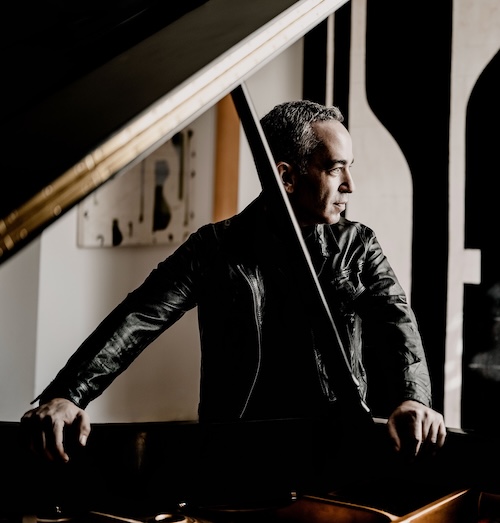
Barnatan, who has championed and performed NUR a number of times with Pintscher, gave a transcendent account of the first two movements, capturing the wistfulness of the opening movement and the coloristic dreamscape of the middle movement. And in the finale, Barnatan brilliantly underscored the juxtaposition of blazing virtuosity with hints of the first movement’s quiet reflection.
Of the many solo passages, special note must be made of the fine playing by acting associate principal horn Lauren Robinson, principal flute Mercedes Smith and acting principal cello Matthew Johnson.
The other major work on the program this weekend is Ravel’s complete ballet score to Daphnis and Chloe. Pintscher’s skill as a conductor was evident right from the start as he captured the lushness of the expansive score and delved into the vibrant orchestral colors and the music’s rich textures and rhythmic vitality. His precise gestures allowed him to elicit expressive and finely crafted playing from the orchestra. The strings sounded luxuriant and warm, and the woodwinds and brass played with fluid articulation and expression.
Ravel employs a wordless chorus in several of the sections of the score. The Utah Symphony Chorus sang with clarity and definition, and Pintsche seamlessly integrated the voices into the orchestral fabric.
A definite highlight of the nearly hour-long work was Smith’s extensive flute solo in the section “Les amours de Pan et Syrinx.” She brought passion and heartfelt emotion to her playing that underscored the sensuousness of the music.
The program opened with the overture to Strauss’ operetta Die Fledermaus. Pintscher’s lighthearted approach to the music captured its high-spirited enthusiasm and lilting waltz rhythms.
The program will be repeated 7:30 p.m. Saturday. utahsymphony.org